
EMERGENCY
Cyber
• Apr 23, 2026
Cybersecurity in Greece: 4 Ransomware Risk Drivers
Traditional approaches to cybersecurity in Greece have long focused on prevention. But in today’s threat landscape, prevention alone is no longer enough. Modern ransomware attacks are structured, persistent, and adaptive, operating as a continuous lifecycle that begins long before a breach and extends well beyond containment. Attackers can remain undetected for months, studying systems, identities and user behavior before launching a coordinated cybersecurity breach. In this context, resilience is not defined by whether an organization is attacked, but by how well it is prepared across every stage of the ransomware lifecycle. A modern cybersecurity strategy must combine four core capabilities: readiness, validation, alignment and response.
4# Are there undetected cybersecurity gaps?
In our recent ransomware engagements, we have observed a consistent pattern:- Initial access through compromised identity
- Privilege escalation within hours
- Backup exposure discovered too late
- Delayed containment due to unclear ownership
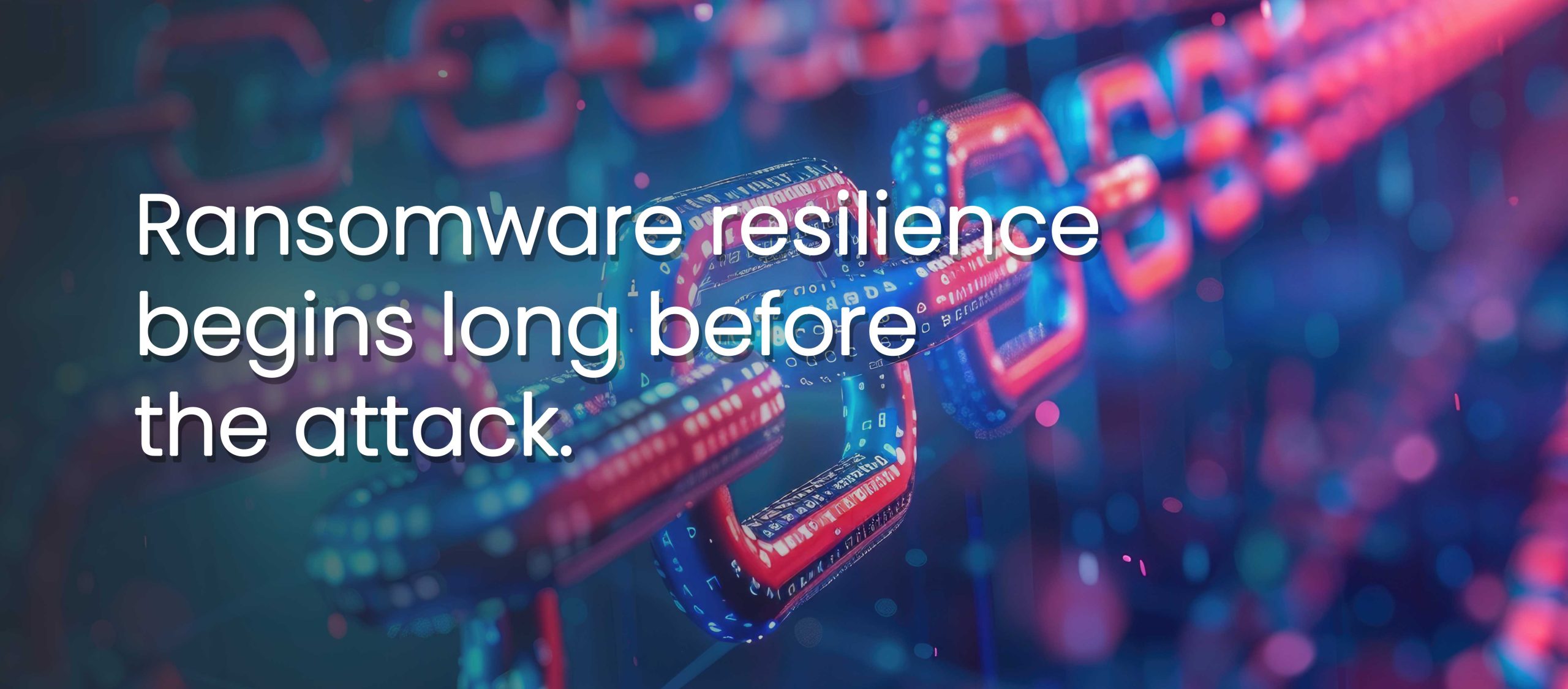
Ransomware resilience starts long before the attack. Without clear visibility, organizations operate on assumptions, often overestimating their preparedness.
An effective ransomware readiness strategy focuses on:
- Detecting exposure across identities, endpoints, cloud and workloads
- Identifying what data could realistically be affected, instead of investigating blindly
- Mapping real attack paths instead of theoretical risks
- Validating detection and containment capabilities
- Prioritizing controls based on business impact and recovery risk
- Evaluating the organization’s cybersecurity training program
A Ransomware Readiness Assessment may help your organization by providing a clear understanding of your current cybersecurity posture. It identifies gaps across identity, endpoints, cloud environments and data protection, while evaluating the maturity of detection and response capabilities.
3# Is your cybersecurity posture built for real-world pressure?
Many organizations believe they are ready in case of a ransomware breach. Until they simulate such an incident. In real attacks:
- Alerts are missed
- Roles become unclear
- Decisions are delayed
- Attackers continue moving undetected
What works on paper often fails under pressure.
Knowing your posture is one thing. Proving it under pressure is another. Bridging this gap between theory and reality requires testing capabilities in real conditions:
- Testing detection and escalation across tools and teams
- Measuring response time and decision-making under pressure
- Evaluating how your detection systems perform against custom ransomware, whether imitating known threat actors or introducing entirely new attack behaviors
- Validating SOC, IT and business coordination
- Identifying where containment or recovery would break down
- Delivering a comprehensive report that details the findings, observations and recommendations gathered during the simulation exercise and provides actionable insights
A recommended approach is to conduct a ransomware simulation. This service tests how systems, tools and teams perform in conditions that resemble a real-world attack. By replicating real-life ransomware attacks, a ransomware simulation enables your organization to turn assumptions into measurable improvements before a real attacker forces the test, highlighting not just whether controls exist, but whether they work together when every minute counts.
2# Where are your data?
In a ransomware breach, many organizations focus on recovery readiness. Fewer ask the hard questions:
- Are our data already exposed?
- Are our credentials circulating?
- Is our attack surface visible to adversaries?
- Would we detect early-stage compromise in time to meet reporting obligations?
Ransomware is often treated as a moment. However, encryption is simply the visible impact. Often driven by Ransomware-as-a-Service (RaaS) ecosystems, attacks involve initial access, lateral movement, data discovery, and exfiltration before encryption.
Under NIS 2 and DORA, organizations must demonstrate continuous risk monitoring, early threat detection and timely incident reporting. Yet many lack a clear view of:
- What data they hold
- Where it resides
- How critical it is
- Whether it is exposed
Without this visibility, managing breach risk—or regulatory compliance—is nearly impossible.
Therefore, it is critical to gain adversary-informed visibility across your external attack surface and identity exposure, enabling:
- Early detection of compromise indicators
- Identification of data and identity exposure before disruption
- Stronger regulatory defensibility under NIS 2 and DORA
The most effective way to achieve this is through a Threat Intelligence Assessment. This service aligns with compliance requirements and ensures that security strategies remain current, effective, and defensible, helping you understand your exposure before a breach becomes public.
1# Do you have a backup strategy?
When ransomware hits, time becomes your biggest risk. Systems go down. Operations stall. Leadership must balance recovery, legal exposure and business continuity, while the incident is still unfolding.
Most organizations say they have backups. Fewer have proven they can recover. Encryption is only half the problem. The real questions are:
- Are backups isolated and immutable?
- Are restores tested under pressure?
- Who leads recovery when escalation begins?
A backup strategy without continuous oversight creates a false sense of resilience. That’s why access to immediate expert support is critical when a ransomware attack knocks on your door and you need to have:
- Rapid access to experienced responders
- Backup validation and exposure review
- Forensic investigation & containment guidance
- Structured recovery to prevent reinfection
Searching for support during a crisis wastes valuable time. An Incident Response Retainer ensures you’re prepared in advance, by aligning response playbooks, defining escalation paths, and tailoring actions to your business priorities. The result: faster recovery with reduced business impact.
The moment of truth
Ransomware is no longer just a technical threat. It is a persistent, evolving business risk. The question is no longer whether you have the right tools, but whether you can manage risk across the entire lifecycle. Because when an attack happens, success is not defined by what exists on paper, but by what works in practice, under pressure, and in time.
Read Next

Apr 16, 2026
SOC & NOC View: What We’re Seeing in Cybersecurity




Start your journey
Our team of seasoned experts is dedicated to delivering tailored solutions that perfectly align with your specific business needs and objectives. Do you want to help you navigate your path to success?