
EMERGENCY
Cyber,
Events
• May 12, 2026
The Three Pillars for Sustainable AI Adoption
Your AI is already working. Is it working for you?
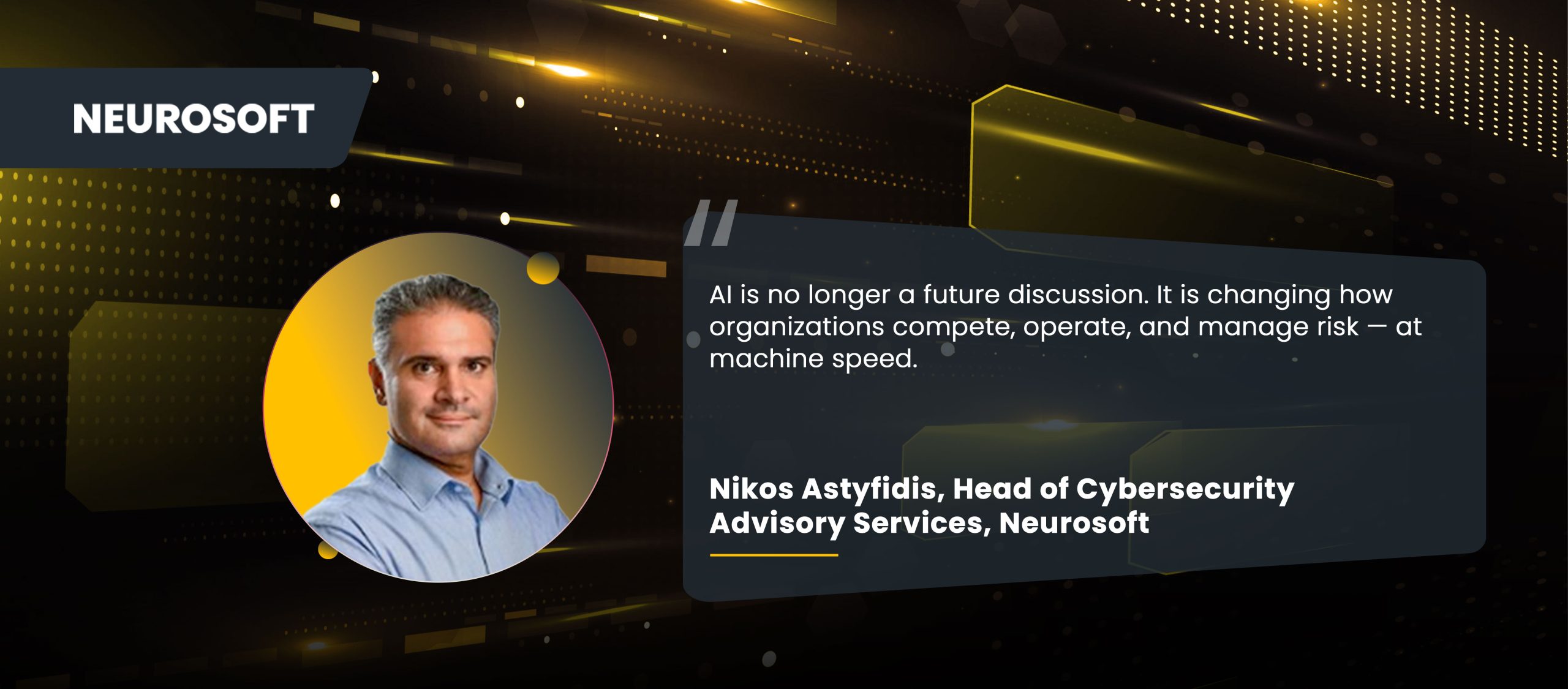
Moreover, “AI is no longer a future discussion. It is changing how organizations compete, operate, and manage risk — at machine speed”, as Nikos Astyfidis, Head of Cybersecurity Advisory Services – Neurosoft, mentioned during Neurosoft’s recent exclusive event, where we discussed how leaders can approach governance and compliance in the AI era, secure intelligent systems, and effectively defend against AI-powered threats.
AI doesn’t just change the way we work. It changes how quickly organizations become exposed. At the same time that it drives a major shift in business productivity, it also accelerates attackers’ capabilities.
The following three pillars form the foundation for sustainable AI adoption, each reinforcing the others.
#1 Pillar: Compliance
Build trust through AI Act compliance.
AI Act is the EU regulation that governs the development, placing on the market, putting into service, and use of AI within the European Union through:
- Human agency & oversight
- Technical robustness & safety
- Privacy & data governance
- Transparency
- Diversity, non-discrimination & fairness
- Societal & environmental well-being
- Accountability
It introduces new challenges but also opportunities to build trustworthy and compliant AI systems, as in the AI era, trust will be earned by those who combine innovation with controls.
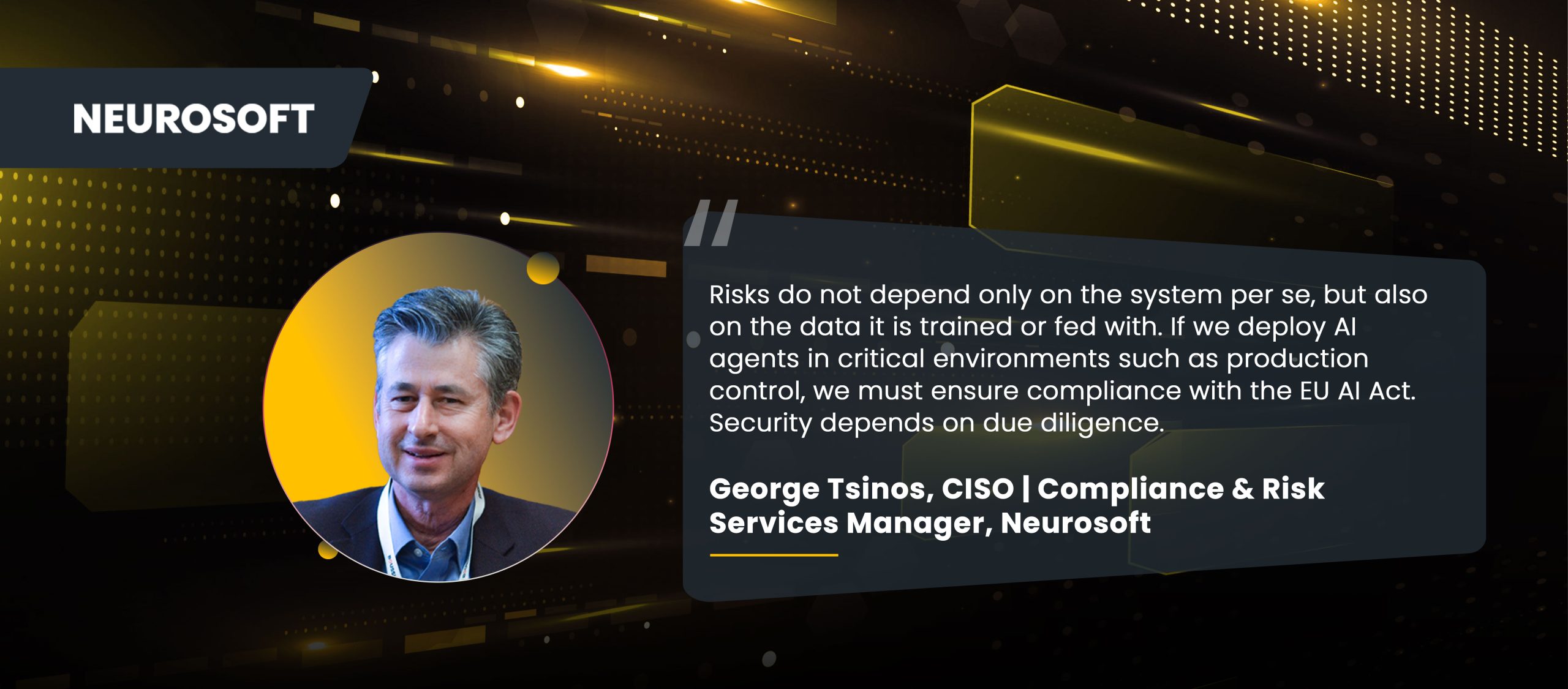
As George Tsinos, CISO | Compliance & Risk Services Manager – Neurosoft, highlighted in our event, “Data are the foundation of every AI system. Risks do not depend only on the system per se, but also on the data it is trained or fed with. If we deploy AI agents in critical environments such as production control, we must ensure compliance with the EU AI Act. Security depends on due diligence”.
#2 Pillar: Technology
Scale securely with AI Security Architecture.
AI is already embedded in customer-facing platforms, critical decision-making systems, and internal tools such as Copilot and agentic AI solutions. Yet, in many deployments, cybersecurity still relies primarily on traditional cybersecurity controls, treating AI as “just another system” while overlooking AI-specific attack surfaces. The result? Organizations may be protecting the infrastructure, but not the “intelligence” layer itself.
Traditional cybersecurity focuses mainly on network, identity and application security. AI, however, derives trust not only from code but from data. Secure code alone does not guarantee a secure model. If the data is compromised, the AI is compromised.
As a result, AI security must address risks unique to intelligent systems, including non-deterministic behavior such as prompt injection, data-driven attack surfaces like AI data poisoning, and model manipulation threats. AI security by design is no longer optional; it is essential for building trustworthy and resilient AI systems.
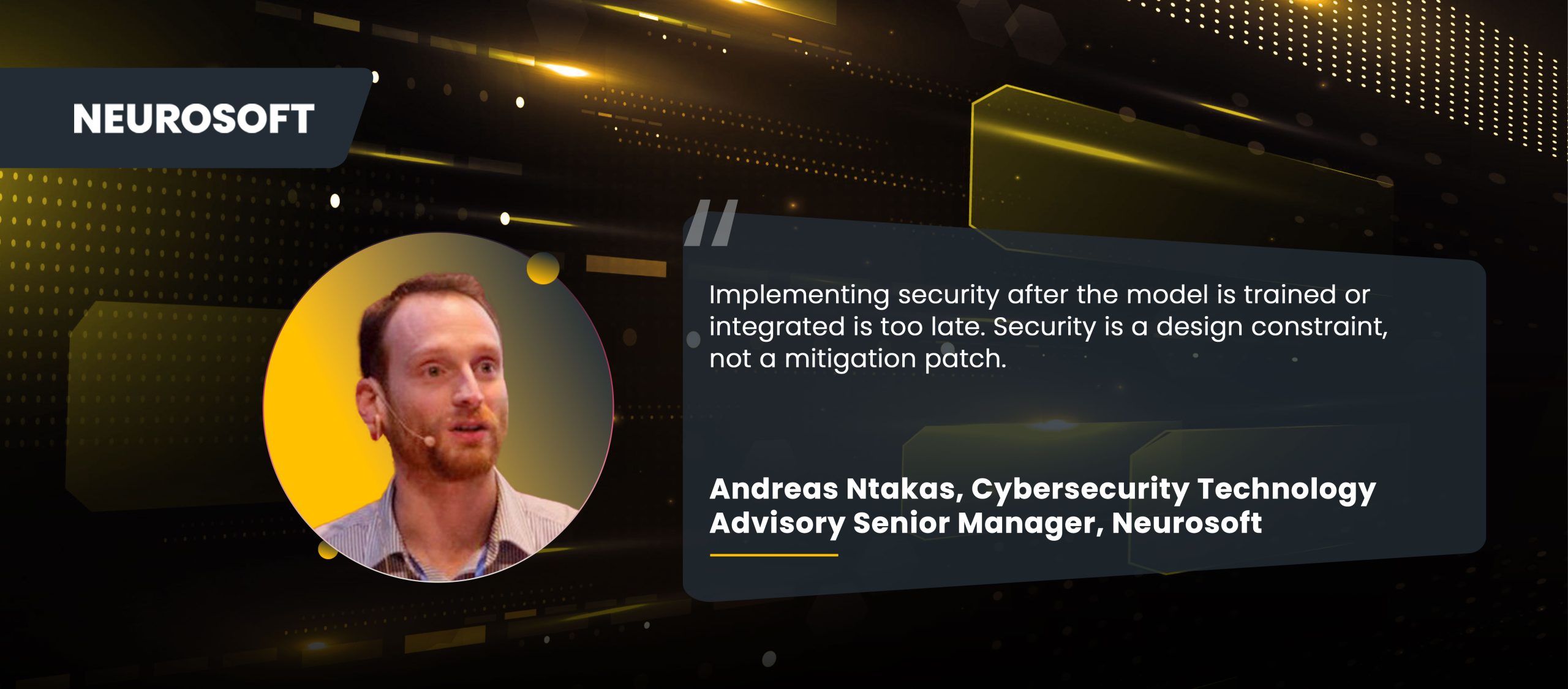
Andreas Ntakas, Cybersecurity Technology Advisory Senior Manager – Neurosoft, pointed out that “Implementing security after the model is trained or integrated is too late. Security is a design constraint, not a mitigation patch”.
#3 Pillar: Cyber Readiness
Grow with confidence through AI-Driven Offensive Security Assessments.
Do you know the weak or exposed assets forgotten in the dark corners of your systems?
Adversaries are already exploiting AI models, data pipelines and automated workflows to discover them. They are now faster than ever and have eyes everywhere.
At the same time, organizations rapidly integrate AI into products, platforms and internal operations. Is there a way to grow with confidence, adopting the power of AI?
AI-Driven Offensive Security Assessments can help:
- Uncovering issues that enable breaches or outages so you can fix what matters.
- Testing SOC playbooks, telemetry and people under realistic attacks to speed containment.
- Proving controls for regulators and lowers legal/financial exposure.
- Creating a prioritized remediation roadmap and measurable risk reduction to protect releases and reputation.
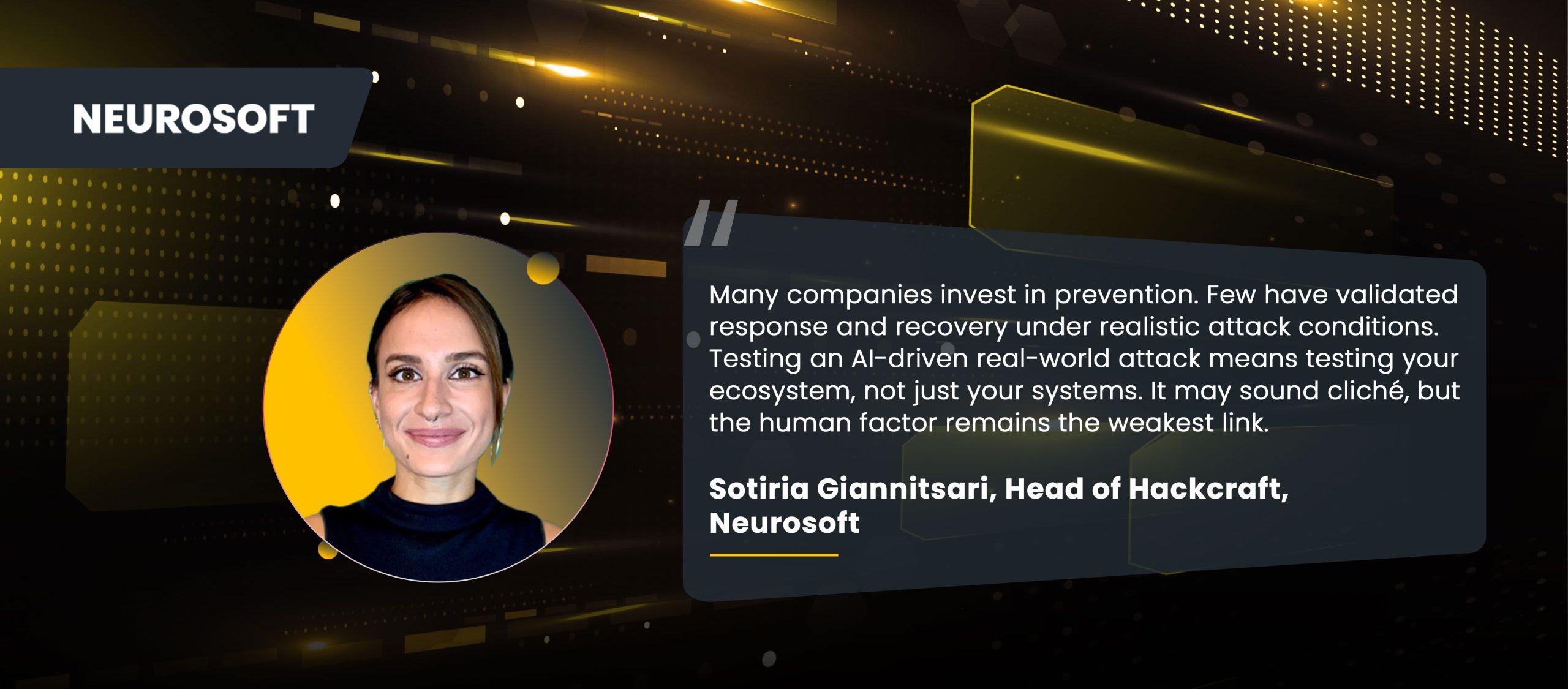
Soti Giannitsari, Head of Hackcraft – Neurosoft, emphasized the importance of Cyber Readiness, stating that: “Many companies invest in prevention. Few have validated response and recovery under realistic attack conditions. Testing an AI-driven real-world attack means testing your ecosystem, not just your systems. It may sound cliché, but the human factor remains the weakest link”.
The organizations that achieve seamless growth and resilience are those that move fast while staying in control. That’s the way to make your AI assets work only for you, securely and safely.
Do you need consultation on AI security? Let's talk.
Read Next


Jul 21, 2026
Smart Greenhouses: The Sensors Are the Easy Part

Jun 19, 2026
Proactive Cyber Resilience via Offensive Security


Start your journey
Our team of seasoned experts is dedicated to delivering tailored solutions that perfectly align with your specific business needs and objectives. Do you want to help you navigate your path to success?