
EMERGENCY
Cyber
• May 25, 2026
Ransomware Lifecycle and Unified Cyber Defense Strategy Plan
Research has shown that organizations may need up to six or even seven months to fully recover from a ransomware attack. On top of that, the impact of ransomware extends far beyond the technical scope of cybersecurity and evolves into a critical business risk and resilience challenge.
Operational disruption, financial losses, regulatory obligations such as the NIS 2 Directive, and reputational damage make ransomware one of the most serious threats facing modern organizations today.
Despite this reality, many businesses still approach ransomware through fragmented controls, isolated security tools, or reactive measures focused primarily on incident response rather than prevention. In practice, however, ransomware must be treated as a continuous lifecycle that begins long before the attack is executed and continues well after containment and recovery.
Understanding the Ransomware Lifecycle
A threat actor can remain undetected inside an organization for up to nine months before launching a ransomware attack. During this time, attackers silently monitor systems, users and business operations while preparing the environment for maximum impact.
Modern ransomware attacks are no longer isolated cyber incidents. They are part of a highly organized cybercriminal economy known as the ransomware ecosystem.
The Ransomware Ecosystem Explained
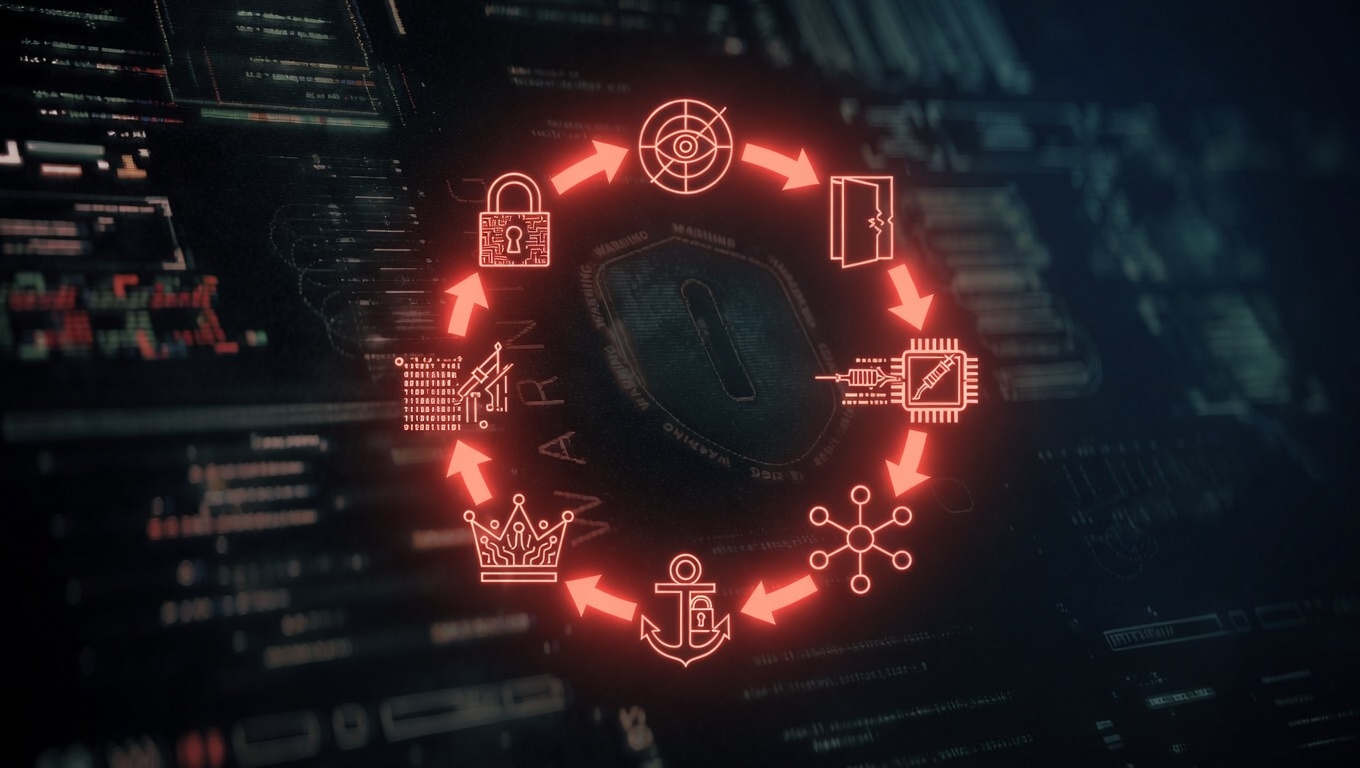
The ransomware ecosystem operates like a sophisticated criminal supply chain, a structured business model that closely resembles legitimate B2B service operations.
Within this ecosystem, multiple specialized actors collaborate:
- Initial Access Brokers (IABs) sell compromised credentials or unauthorized VPN access.
- Affiliates perform lateral movement and privilege escalation within the victim environment.
- Operators deploy the ransomware payload and execute system encryption.
- Negotiators and even organized call centers pressure victims into paying ransom demands.
In parallel, additional support mechanisms operate behind the scenes, including:
- money laundering processes
- crypto mixers and cash-out operations
- data exfiltration prior to encryption
- leak sites for public data exposure
Ransomware-as-a-Service (RaaS): The Industrialization of Cybercrime
This highly organized operating model is known as Ransomware-as-a-Service (RaaS): a professionalized cybercrime ecosystem built around collaboration models, revenue sharing, SLAs and even “customer support” structures.
In other words, ransomware is no longer the work of isolated hackers. It has evolved into a mature and highly efficient digital extortion industry.
As ransomware attacks continue to evolve in sophistication and scale, organizations must move beyond fragmented security approaches and adopt integrated, lifecycle-driven cybersecurity strategies.
A proactive, end-to-end ransomware defense model — combining people, processes and technology — is now essential for achieving operational resilience, regulatory compliance, and long-term business continuity.
Where Time Is Lost in Real Incidents
There are three failure points that turn manageable incidents into crises, and all of them are correlated with “time loss”. Where time is lost in real incidents?
- Identity abuse goes uncorrelated: Compromised credentials trigger isolated alerts across identity, email and endpoint systems, but no one connects the dots until the attacker has already escalated privileges. Valuable hours are lost to fragmented triage.
- Endpoint alerts are treated in isolation: Alerts are investigated one by one, missing the broader attack context and allowing lateral movement to go unnoticed. As a result, the true scope of the attack is underestimated.
- No unified incident timeline: Responders must manually correlate logs from multiple tools, creating visibility gaps where attackers can operate undetected. Critical decisions are delayed when time matters most.
Why Organizations Need a Unified Ransomware Strategy
The goal is not simply to deploy multiple disconnected cybersecurity tools, but to implement the right cybersecurity strategy based on each organization’s business objectives, operational requirements and risk profile.
Effective ransomware protection requires a combination of:
- advanced cybersecurity technologies
- experienced cybersecurity professionals
- mature operational processes
- robust cybersecurity architecture
- continuous monitoring and management
From design and implementation to day-to-day operation and optimization, organizations need a holistic approach capable of protecting every stage of the ransomware lifecycle.
This is where a Managed Security Services Provider (MSSP) can play a critical role. By orchestrating and managing the entire cybersecurity ecosystem end-to-end, an MSSP enables organizations to strengthen cyber resilience, improve operational continuity, and reduce the risk of devastating ransomware incidents.
Do you need consulting from a Neurosoft expert? Contact us!
Read Next


Sep 22, 2026
2 awards at the BITE Awards 2026



Jul 21, 2026
Smart Greenhouses: The Sensors Are the Easy Part

Start your journey
Our team of seasoned experts is dedicated to delivering tailored solutions that perfectly align with your specific business needs and objectives. Do you want to help you navigate your path to success?