
EMERGENCY
Cyber,
Field
• Jul 21, 2026
Smart Greenhouses: The Sensors Are the Easy Part

Precision agriculture has stopped being a pilot project. Walk onto an automated site and the plot next door tells the story on its own: less water going in, conditions holding steady, more coming out per square meter. The technology works. That argument is over.
Here is the part nobody puts on a conference slide. There is a long distance between a system that looks great in a demo and one a grower can lean on for a full season, and most projects fall into it. Not because the sensors fail. Because of everything around them.
What it actually changes
The value is not complicated. Irrigation runs on what the crop is actually telling you, not on a timer, so you stop pouring water, energy and fertilizer into a fixed schedule the plant never asked for. Conditions stay in range around the clock instead of drifting between the moments someone is there to look. Frost and heat spikes trigger an alert, and often an automatic response, before one bad night takes the whole cycle. And every intervention gets logged on its own, which happens to be the exact paperwork export buyers and GlobalG.A.P. want to see.
That is the easy part to buy. Sensors, controllers, a dashboard. Off the shelf. If that were the whole job, everyone would have done it already.
The four things no demo shows you
A greenhouse is not an office, and a field behaves nothing like a corporate building. That is where the real work lives.
- Start with connectivity. Fields do not come with cabling, and mobile coverage is usually thin at the precise spot the greenhouse sits. Your automation is only as good as the link carrying its data. This is why we build on Cisco. Enterprise and industrial networking, designed for exactly this: keeping a connection alive and secure in a place that was never wired for it. Lose the link and the smartest system on the market goes quiet, so the link is not where you cut corners.
- Then power. A lot of the best growing land sits nowhere near a stable mains supply. Sensors and controllers need power that has been properly thought through, or the whole thing goes dark at the worst possible moment and takes your visibility with it.
- Now the one the agricultural conversation almost always skips: security. A smart greenhouse is a remotely controllable industrial system. The vents, the valves, the climate, all of it reachable over a network. Without operational technology security, that is an open door. In plain terms, somebody who is not you could open your vents on a frost night, or lock your irrigation in the middle of a heatwave. These control systems are rarely built with that in mind. We secure the whole path, from the Cisco network layer up to the control system itself, and we monitor it. It is a real gap for most installations, and it should worry people more than it does.
- And last, the boring one that decides everything. A valve fails at two in the morning at the peak of the season. That is not a support ticket. That is a lost crop, unless there are spare parts stocked nearby, a technician who can actually reach the site, and a service level that means something. Software support alone does not save a harvest.
Buy the box, or buy the outcome
Two ways to get a smart greenhouse into the ground.
Buy the hardware and own everything else yourself. Which means becoming a networking, cybersecurity and field-maintenance operation, on top of the small matter of running a farm.
Or take it as a service. One partner on the hook for the connectivity, the control, the security and the call at 2am. Built on Cisco, as a Cisco Designated Partner, and designed, deployed and supported by us. The risk stays with the people who put it in the ground. The cost is predictable instead of landing as a capital shock, and the water and energy you stop wasting covers a good chunk of the running bill.
On a farm, where the margins are thin and the expertise is already stretched across actually growing things, the second one is usually what is still standing when the season gets hard.
Who this is for
Operators scaling past what one person can keep an eye on. Cooperatives that need every member running to the same standard. Agri-businesses getting squeezed on water, on labour, on proving where their produce came from.
The technology is ready. The question is who stands behind it.
The hard part was never the sensors. It is the connectivity, the power, the security, and the people who keep the whole thing alive after the install crew has packed up and left. That is infrastructure work. You build that competence over decades in banking and industry and systems that cannot go down, not over a demo.
Powered by Cisco. Designed, deployed, secured and supported by us.
So if you run a greenhouse or a cooperative and you are thinking about automation, do not start with which sensors to buy. Start with who is going to be there when a valve gives out on a Sunday night.
Talk to us about what a managed smart greenhouse would look like for your operation.
Read Next
Sep 22, 2026
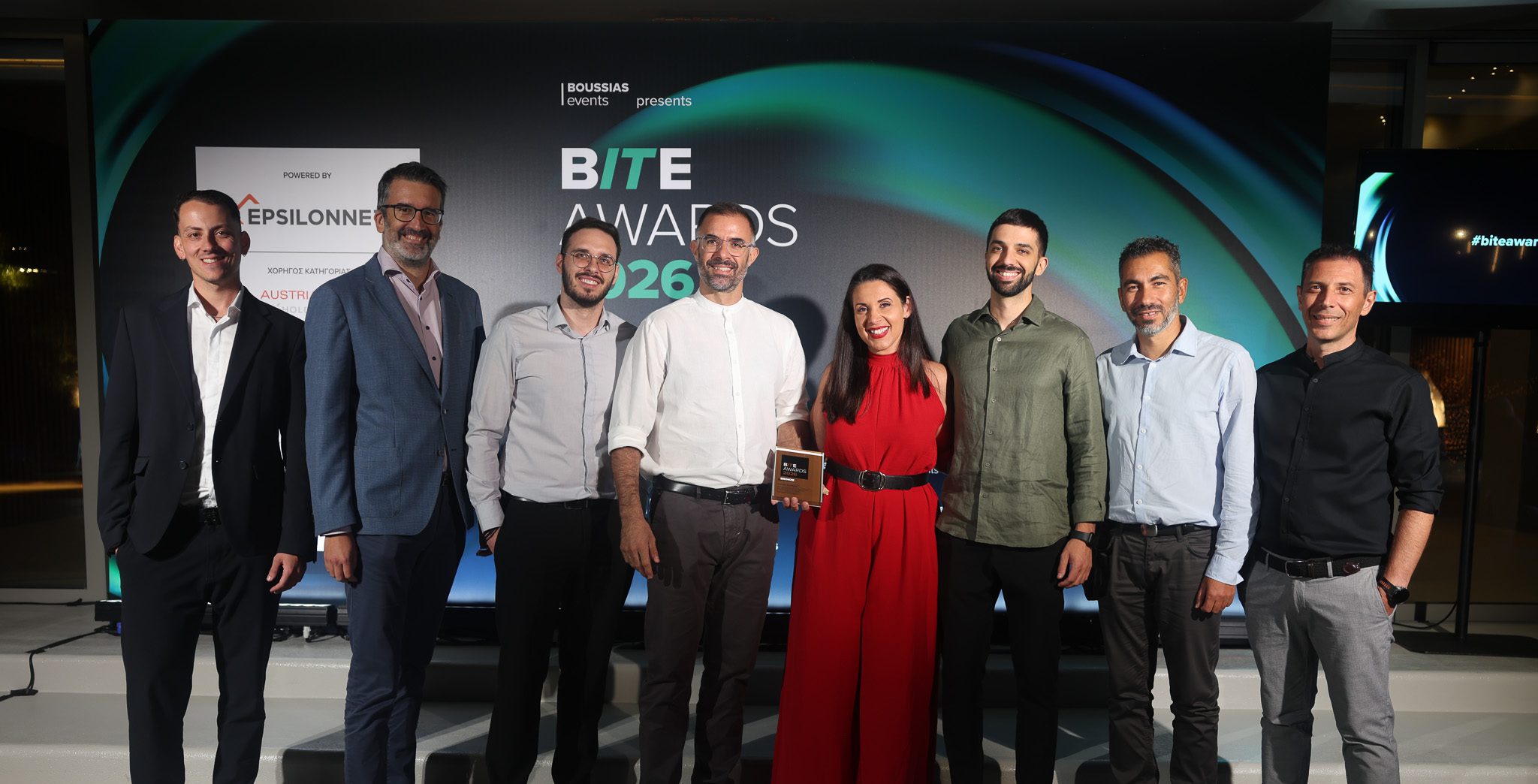
2 awards at the BITE Awards 2026


Start your journey
Our team of seasoned experts is dedicated to delivering tailored solutions that perfectly align with your specific business needs and objectives. Do you want to help you navigate your path to success?